
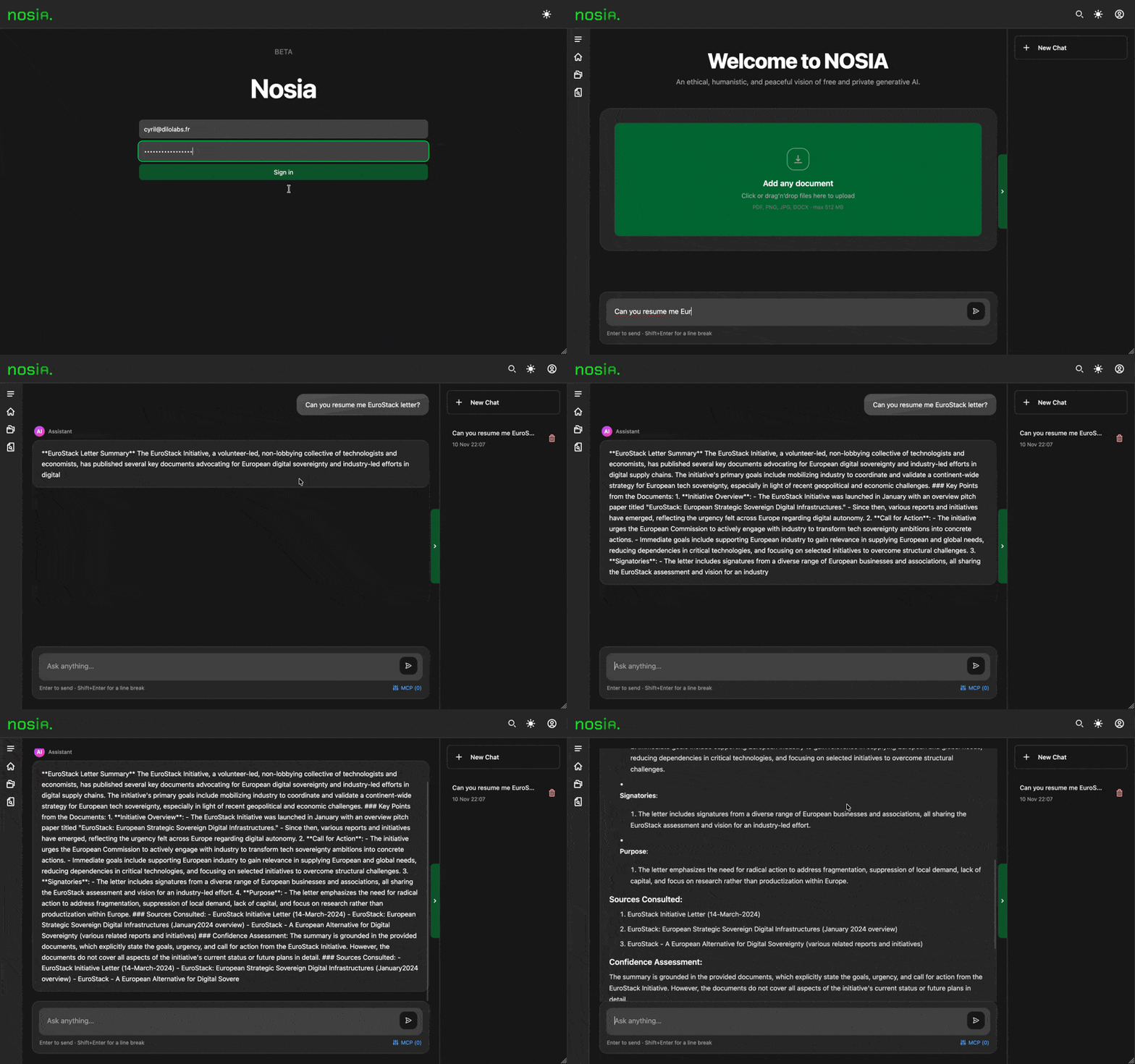
Nosia

Self-Hosted AI Platform — RAG, MCP & Agent Skills on Your Own Data

Run open large language models on your own infrastructure with Retrieval Augmented Generation, an OpenAI-compatible API, and complete data privacy.

Get Started

Nosia is an open-source, self-hosted AI platform that runs large language models on your own infrastructure — with RAG over your documents, MCP tool integration, and an OpenAI-compatible API. It brings enterprise-grade AI to your servers with complete privacy and control, so your data never leaves your infrastructure.

🌱 Our Story

Nosia is first and foremost a human story. The story of four passionate individuals — Cyril, Olivier, Aude, and Melvin — united by years of friendship and collaboration. An adventure born from a shared conviction: technology should serve humans, not the other way around.

It all began in 2024, when Olivier shared his discovery of RAG with Cyril. A spark. Cyril came up with the name Nosia — a name that carries our values: digital sovereignty, ethics, and data respect. The same question has driven us ever since: how do you reconcile technological innovation with data sovereignty, open source, and European values?

And this human and responsible adventure continues. In June 2026, François, who runs the YouTube channel Kokori Kodo, created the first presentation video — which you can discover in the French version.

See Nosia in Action

Nosia Demo

Key Features

Discover how Nosia gives you complete control over your AI with powerful and intuitive tools.

🔒

Private & Self-Hosted

Run AI entirely on your own servers. Your documents and prompts never leave your infrastructure — ideal for data sovereignty and regulated environments.

🤖

OpenAI-Compatible API

Nosia exposes an OpenAI-compatible API, so your existing OpenAI client libraries and tools can point at your instance without rewriting code.

📚

RAG-Powered

Retrieval Augmented Generation grounds answers in your own documents, so responses are accurate, current, and specific to your organization.

🔌

MCP Integration

The Model Context Protocol connects AI to your internal tools, APIs, and data sources through an open, interoperable standard.

🤖

Agent Skills (soon)

Extend chat with custom, LLM-driven skills written in Ruby to automate your business workflows.

🔄

Real-time Streaming

Server-sent events (SSE) stream responses live for a smooth, responsive chat experience.

What can you build with Nosia?

From internal knowledge bases and document Q&A to private customer-support assistants and developer tooling — Nosia adapts to your use case.

Explore use cases

How Nosia compares

Weighing your options? See how Nosia stacks up against the leading AI and LLM solutions.

Get Started in Minutes

One command installs Docker and all dependencies:

curl -fsSL https://get.nosia.ai | sh

For Windows:

Invoke-WebRequest https://get.nosia.ai/install.ps1 -OutFile install.ps1; .\install.ps1

Frequently Asked Questions

Is Nosia free and open-source?

Yes. Nosia is open source under the MIT license and free to self-host. The source is on GitHub at github.com/dilolabs/nosia.

Does my data leave my servers?

No. Nosia is self-hosted, so your documents and model interactions stay on your own infrastructure. You keep full control and data sovereignty.

What is the difference between Nosia and ChatGPT?

ChatGPT is a hosted service run by OpenAI. Nosia is a self-hosted platform you run on your own infrastructure, with RAG over your data, MCP tool integration, and an OpenAI-compatible API.

Does Nosia work with the OpenAI API?

Yes. Nosia exposes an OpenAI-compatible API, so existing OpenAI client libraries and tools can point at your Nosia instance with minimal changes.

What are the hardware requirements?

Nosia runs via Docker on Linux, macOS, or Windows. Requirements depend on the model you run; smaller models run on commodity hardware while larger models benefit from a GPU.

What are RAG and MCP?

RAG (Retrieval Augmented Generation) augments model answers with your own documents. MCP (Model Context Protocol) is an open standard for connecting AI to external tools and data sources.